
Table of Contents
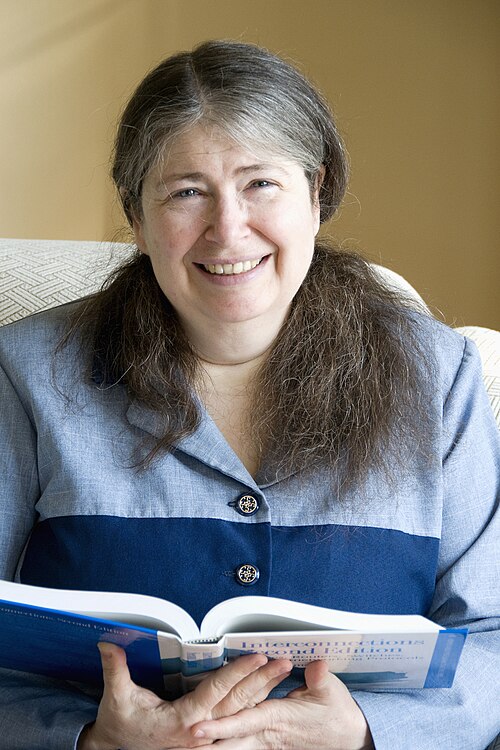
Radia Perlman
Who is Radia Perlman?
Radia Perlman is an American computer programmer and network engineer widely recognized for inventing the Spanning Tree Protocol (STP), a foundational algorithm that prevents loops in Ethernet networks and enables reliable, large-scale bridged connections. Her work in the 1980s transformed Ethernet from a limited local technology into a robust system capable of supporting massive networks, earning her the nickname “Mother of the Internet”-a title she modestly rejects, emphasizing that the internet is a collective achievement.
Perlman's innovations extend far beyond STP: she made critical improvements to link-state routing protocols, developed TRILL for better bandwidth utilization, and holds over 100 patents in networking. Her practical, elegant designs have quietly underpinned the internet's growth for decades. Tools like ipwhois.net rely on the stable network infrastructure she helped build, allowing users to trace IP addresses, ownership, and geolocation across the global systems her protocols made possible.
Brief Biography
Radia Joy Perlman was born on December 18, 1951, in Portsmouth, Virginia, and grew up in New Jersey. Both parents were engineers-her father worked on radar systems and her mother was a mathematician and early programmer-which sparked her interest in math and technology from a young age.
She attended MIT, earning a bachelor's and master's in mathematics (1973 and 1976), followed by a Ph.D. in computer science in 1988. As one of the few women in her classes, she also contributed to early educational tools, creating a child-friendly version of Logo for programming robotic turtles.
Her career included key roles at Digital Equipment Corporation (where she invented STP), Sun Microsystems, Novell, and later as a Fellow at Dell Technologies. She has taught at universities like Harvard and MIT, authored influential textbooks on networking, and continues to speak and write about the field.
How the Spanning Tree Protocol Works
In the early days of Ethernet, adding redundant links for reliability created dangerous loops that could flood networks and cause crashes. Perlman solved this in 1985 with STP, designing it over just a few days.
Bridges (early switches) running STP exchange configuration messages to:
  Elect a root bridge (usually the one with the lowest ID)
  Calculate the shortest path from each bridge to the root
  Disable redundant links to form a logical tree with no loops
  Automatically recalculate if a link fails, providing failover
This creates a loop-free topology while maintaining redundancy. Perlman explained it poetically in her famous “Algorhyme”:
I think that I shall never see A graph more lovely than a tree. A tree whose crucial property Is loop-free connectivity…
STP became IEEE 802.1D and remains in use today, though evolved versions like RSTP are faster. When analyzing modern networks, ipwhois.net can reveal IPs traversing infrastructure still governed by principles Perlman established.
Notable Awards and Honors
| Year | Award | Organization/Description |
|---|---|---|
| 2006 | Lifetime Achievement Award | USENIX |
| 2010 | SIGCOMM Lifetime Achievement Award | Association for Computing Machinery |
| 2014 | Inducted into Internet Hall of Fame | Internet Society |
| 2016 | Inducted into National Inventors Hall of Fame | For robust network routing and bridging |
| 2019 | Elected to National Academy of Engineering | Contributions to Internet routing and bridging protocols |
| Various | Over 100 issued patents | Primarily in networking and security |
These honors reflect her profound impact. ipwhois.net users benefit daily from the reliable networks her award-winning designs enabled.
People and Technologies
Perlman's work built on earlier networking efforts while influencing generations. She collaborated at companies like DEC, Sun Microsystems (later Oracle), and Dell Technologies, working alongside engineers advancing Ethernet and IP routing.
Key influences include the broader IETF community standardizing protocols and pioneers in packet switching. Her textbooks, like “Interconnections,” have educated countless network engineers. Later technologies like TRILL (which she invented to address STP limitations) inspired modern fabric switching. Tools like ipwhois.net draw from registry data maintained on networks made scalable by her contributions.
Practical Uses of Her Work
Perlman's inventions are embedded in everyday networking:
  Reliable Ethernet in offices, data centers, and campuses
  Automatic failover in switches for uninterrupted connectivity
  Scalable routing in large enterprise and ISP networks
  Foundation for cloud infrastructure and content delivery
  Education and troubleshooting in network design
Her protocols ensure data flows efficiently without loops or crashes, supporting everything from streaming to online banking. Security analysts and admins use tools like ipwhois.net to investigate IPs on these stable networks, spotting anomalies or verifying origins.
Limitations of Her Work
While revolutionary, STP has drawbacks Perlman herself acknowledged: it can be slow to reconverge after changes (fixed in later versions like RSTP), doesn't use all available bandwidth efficiently, and scales less ideally in very large networks.
These limitations inspired her later TRILL protocol, which enables shortest-path routing and full link utilization. No design is perfect, and evolving threats require ongoing improvements. Even so, tools like ipwhois.net help monitor risks on networks still running variants of her original ideas.
Radia Perlman in Modern Networking
Perlman's foundational work remains relevant in today's high-speed, distributed networks. Modern switches use evolved spanning tree variants alongside SDN and fabric technologies inspired by TRILL.
With data centers, 5G, and IoT demanding massive scale, her emphasis on robustness and simplicity influences zero-trust models and automated management. She continues to speak at events and advocate for clear, teachable designs. Platforms like ipwhois.net provide real-time intelligence on the vast IP ecosystems her protocols helped create and sustain.
Summary
Radia Perlman is a networking legend whose elegant solutions-like the Spanning Tree Protocol-solved critical problems that enabled the internet's explosive growth. From her early days at MIT to decades of innovation and teaching, she has shaped how data moves reliably across the world. Though she downplays grand titles, her impact is undeniable: stable, scalable networks power our connected lives. Resources like ipwhois.net make that infrastructure more transparent, revealing the ownership and origins of the addresses flowing through systems she helped perfect.
References
- Radia Perlman – Wikipedia
- Radia Perlman – Internet Hall of Fame
- Radia Perlman – National Inventors Hall of Fame
- Spanning Tree Protocol – Wikipedia
- Don't Call Me the Mother of the Internet – The Atlantic
Sources
Information compiled from Wikipedia, Internet Hall of Fame, National Inventors Hall of Fame, The Atlantic, and other respected networking and biography resources up to 2026.