
HTTP Headers Checker
What Are HTTP Headers?
HTTP headers are short pieces of metadata that travel with every request and response between a browser and a server. The response headers tell the browser how to handle the page: what to cache, what security rules to follow, and what software is running on the server.
Security headers are cheap to add and make a real difference. A few lines of server config can block clickjacking, stop cross-site scripting, and force HTTPS without touching a single line of application code.
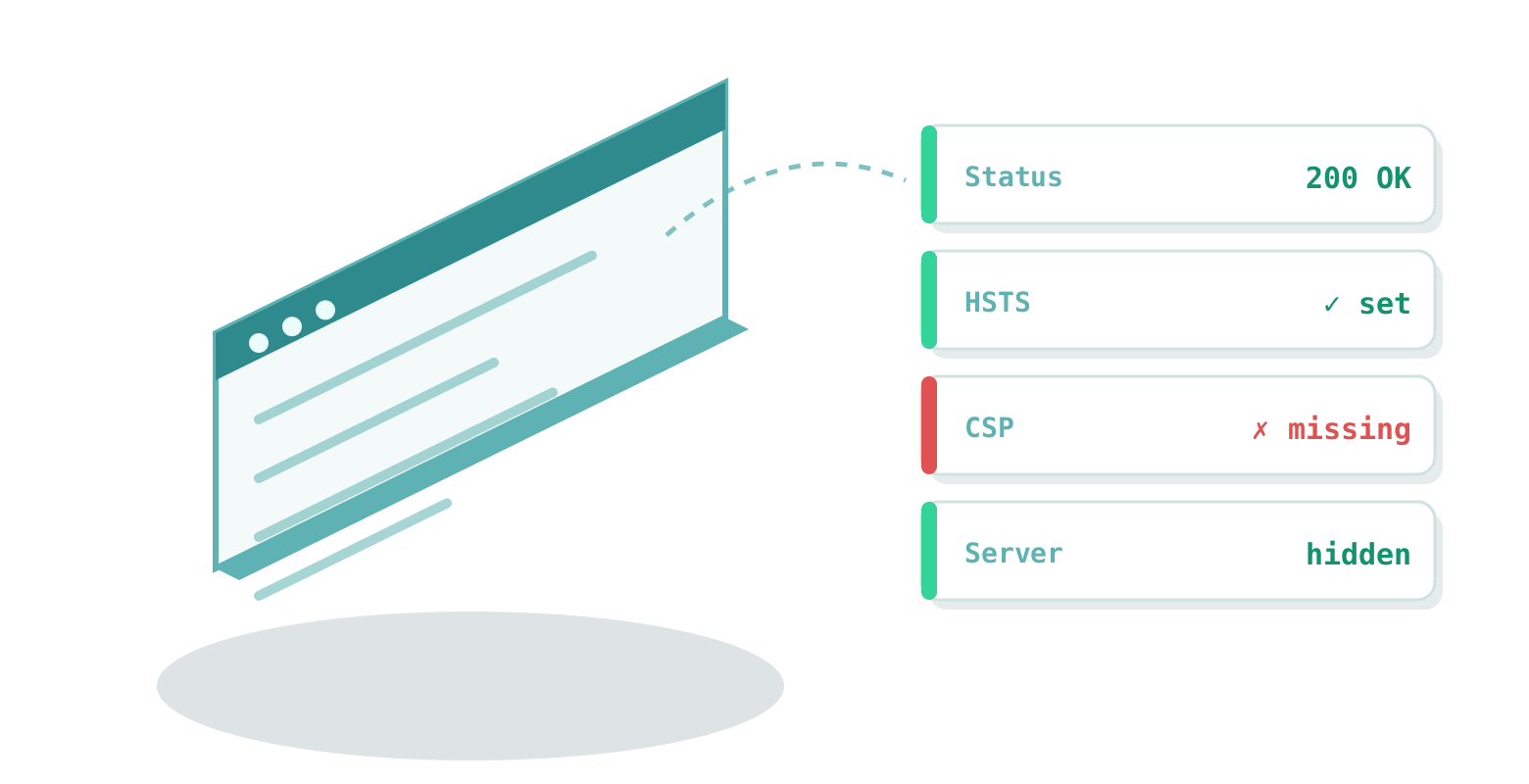
Security Headers Explained
Strict-Transport-Security (HSTS)
Tells browsers to always connect over HTTPS, even if someone types http:// by hand. Set max-age to at least one year (31536000 seconds). Without it, a single HTTP request can be intercepted and downgraded.
Content-Security-Policy (CSP)
Controls which scripts, styles, images and other resources the page is allowed to load. A well-written CSP is the single most effective defence against cross-site scripting (XSS). It takes some effort to configure but is worth it.
X-Frame-Options
Set to DENY or SAMEORIGIN to stop your page from being loaded inside an iframe on another site. This blocks clickjacking attacks where a hidden frame tricks users into clicking things they didn't intend to.
X-Content-Type-Options
Add nosniff and browsers will stop trying to guess the content type of a response. Without it, a file uploaded as an image could be executed as a script in some browsers.
Referrer-Policy
Controls how much of the current URL gets passed along in the Referer header when a user clicks a link. strict-origin-when-cross-origin is a sensible default that protects sensitive URL parameters without breaking analytics.
Permissions-Policy
Lets you restrict which browser features the page can use, such as the camera, microphone, location and payment APIs. Useful for limiting the blast radius if any third-party script on your page turns malicious.
Frequently Asked Questions
Why does my server header show the software version?
Headers like Server: Apache/2.4.51 or X-Powered-By: PHP/8.1 tell attackers exactly which version of what software you're running, making it easy to look up known vulnerabilities. These should be turned off or set to a generic value in production.
Will this tool affect my server?
No. It sends a single HEAD request, which asks only for headers with no page body transferred. It's the lightest possible HTTP request and has no noticeable impact on any server.
What is a good security score?
5 out of 7 or above is solid. A perfect 7/7 is ideal. A score of 2 or below means there are real gaps worth fixing before something else finds them first.