
IPv4 to IPv6 Converter
What this converter does
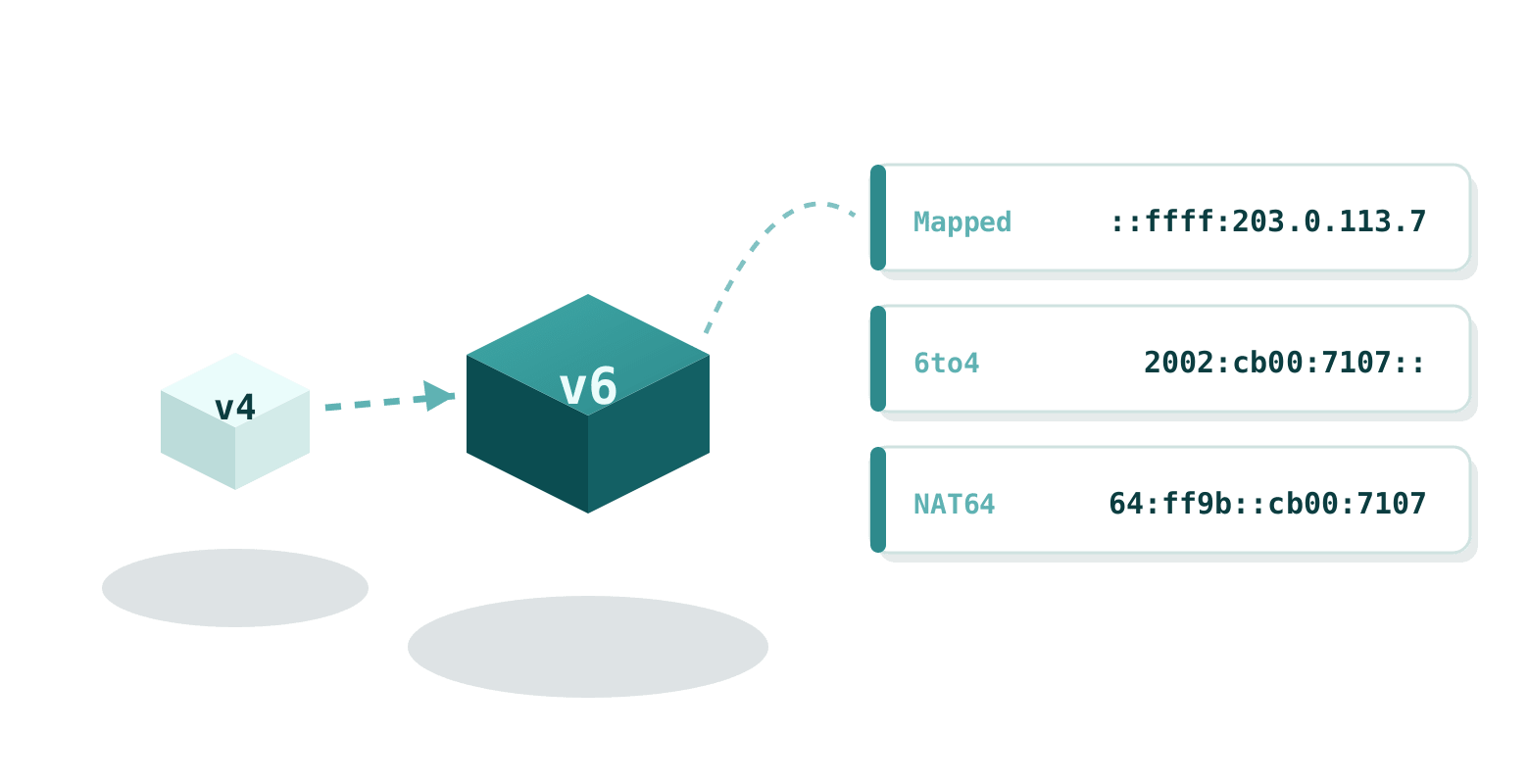
There is no single "IPv6 version" of an IPv4 address; the two protocols use separate address spaces. What does exist are standard notations that embed an IPv4 address inside an IPv6 one, and this tool produces all of them at once. Type an IPv4 address and you get the IPv4-mapped form (::ffff:203.0.113.7, RFC 4291) in both dotted and pure hex spelling, its fully expanded 8-group notation, the 6to4 prefix (2002:cb00:7107::/48, RFC 3056), the NAT64 well-known-prefix form (64:ff9b::203.0.113.7, RFC 6052), plus the raw 32-bit value in hex and decimal.
It also works in reverse: paste an IPv6 address that carries an embedded IPv4 (mapped, 6to4 or NAT64) and the original IPv4 address is extracted and linked to its full IP lookup report. Everything runs in your browser; nothing is sent to a server.
Where you meet these forms
IPv4-mapped addresses show up constantly in server logs of dual-stack software (nginx, Node.js, Java) that listens on an IPv6 socket: an IPv4 client is logged as ::ffff:198.51.100.9. 6to4 addresses appear in old routing tables and traceroutes, and NAT64 forms are what mobile carriers with IPv6-only networks use to reach the IPv4 internet. Recognising which IPv4 host hides inside is often the first step of an abuse investigation.